Farmington Hills, MI · Garage Door Service
Garage door repair built around Farmington Hills houses, not a national script
Spring, opener, and panel repair for Farmington Hills homes built mostly in the 1960s and 70s, sized to the cold winters and older hardware common on these streets.
- Repairs & new doors
- Springs & openers
- Serving 5 nearby communities
What We Do
Garage door services in Farmington Hills
From a snapped spring to a full door replacement - repairs, springs, openers and new doors.
Garage Door Repair
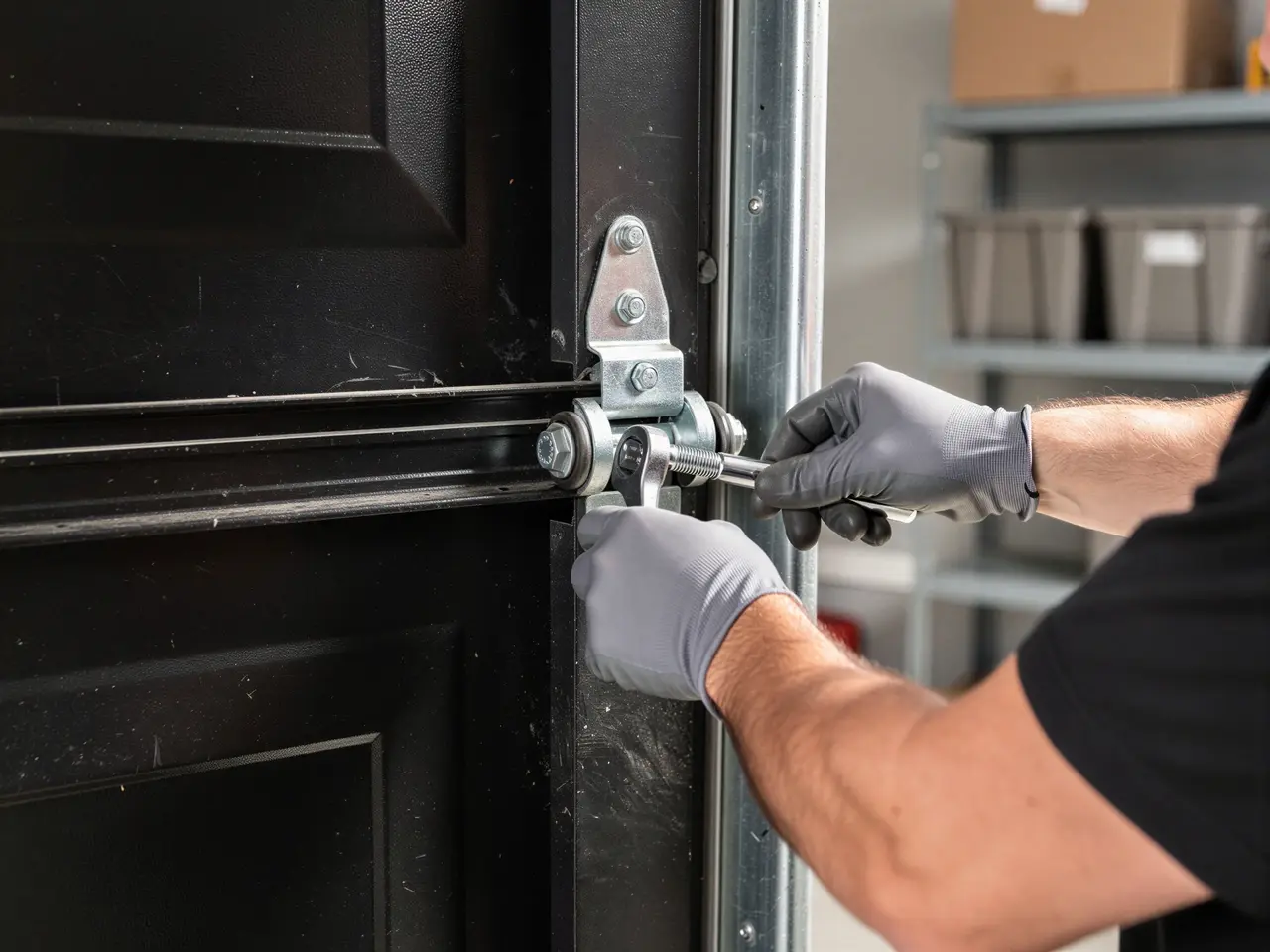
Off-track doors, snapped cables, bent panels and grinding openers - diagnosed and fixed.
Learn more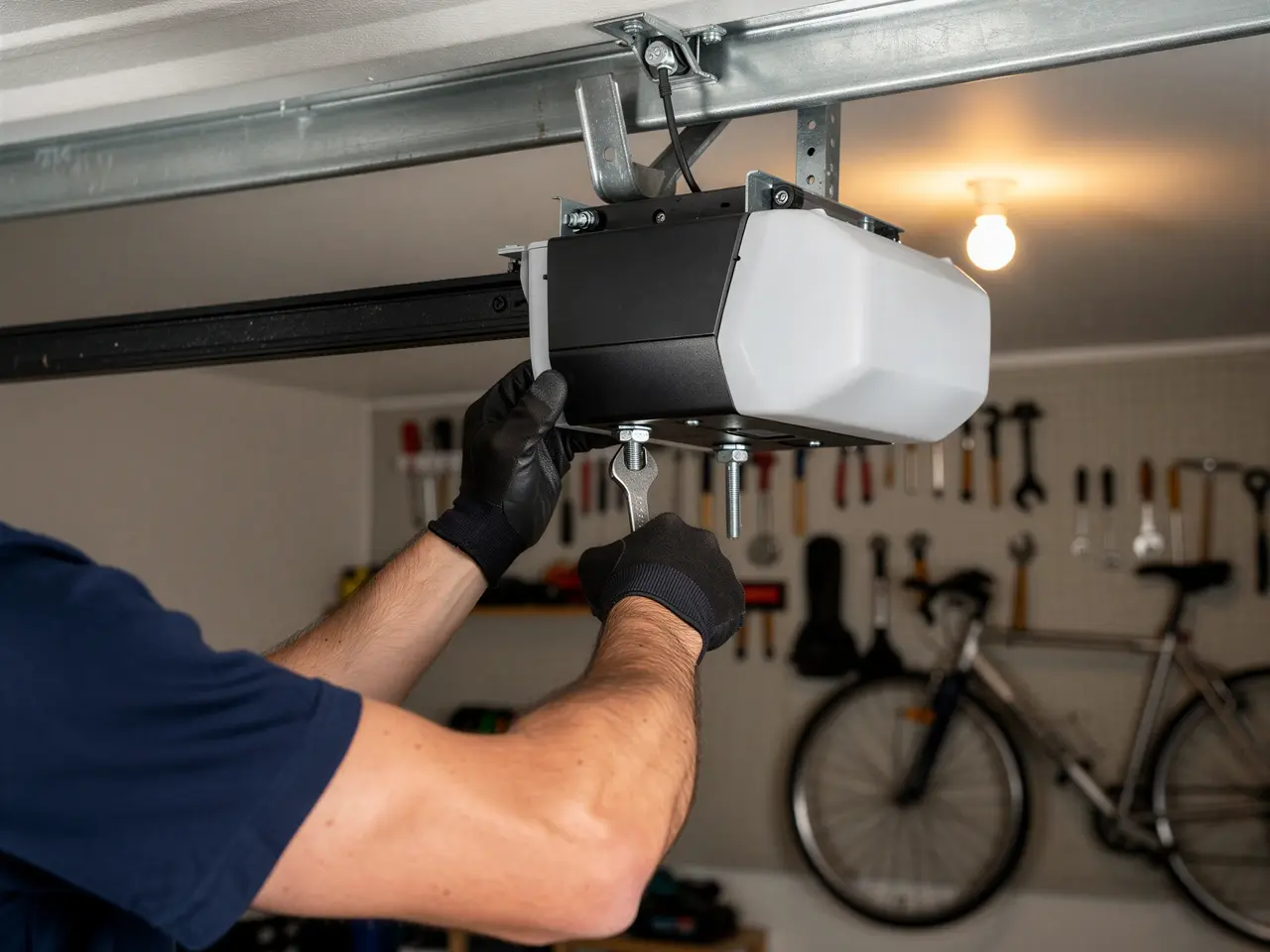
Opener Installation
New openers sized to your door, wired, programmed and safety-tested.
Learn more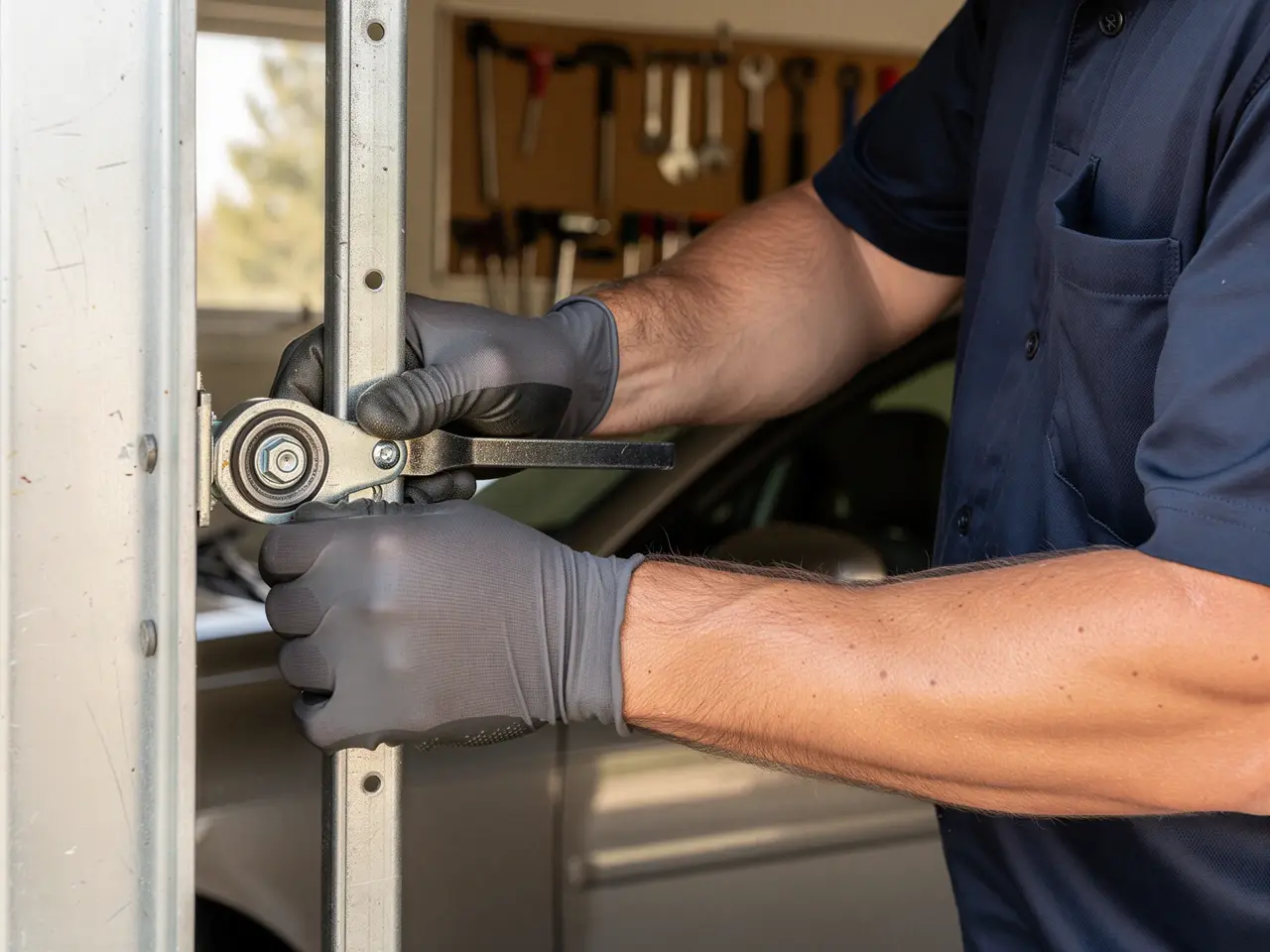
Off-Track Repair
Doors jumped the track re-set, aligned and re-tensioned so they run true.
Learn more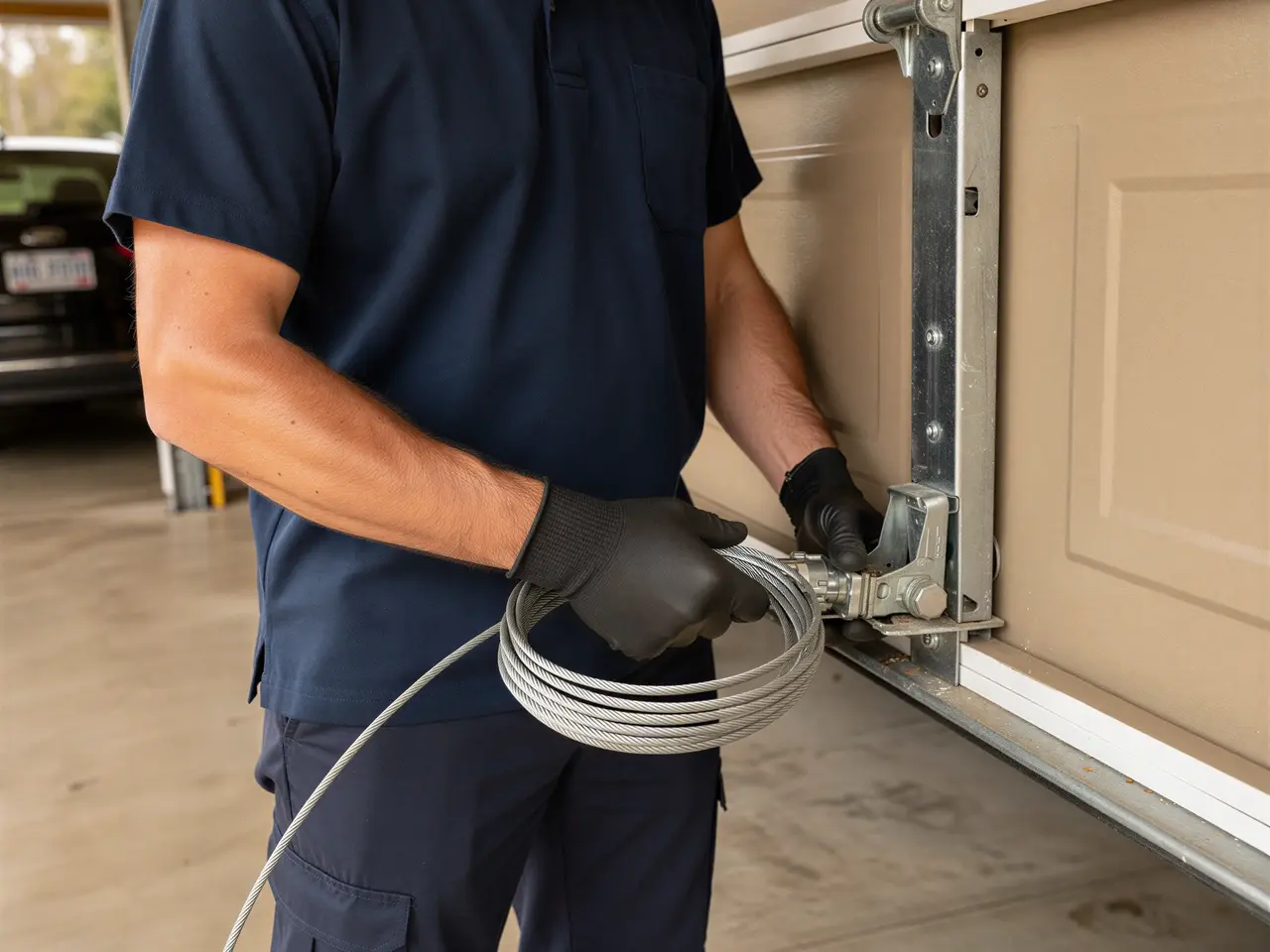
Cable Repair
Frayed or snapped lift cables replaced and balanced against the springs.
Learn more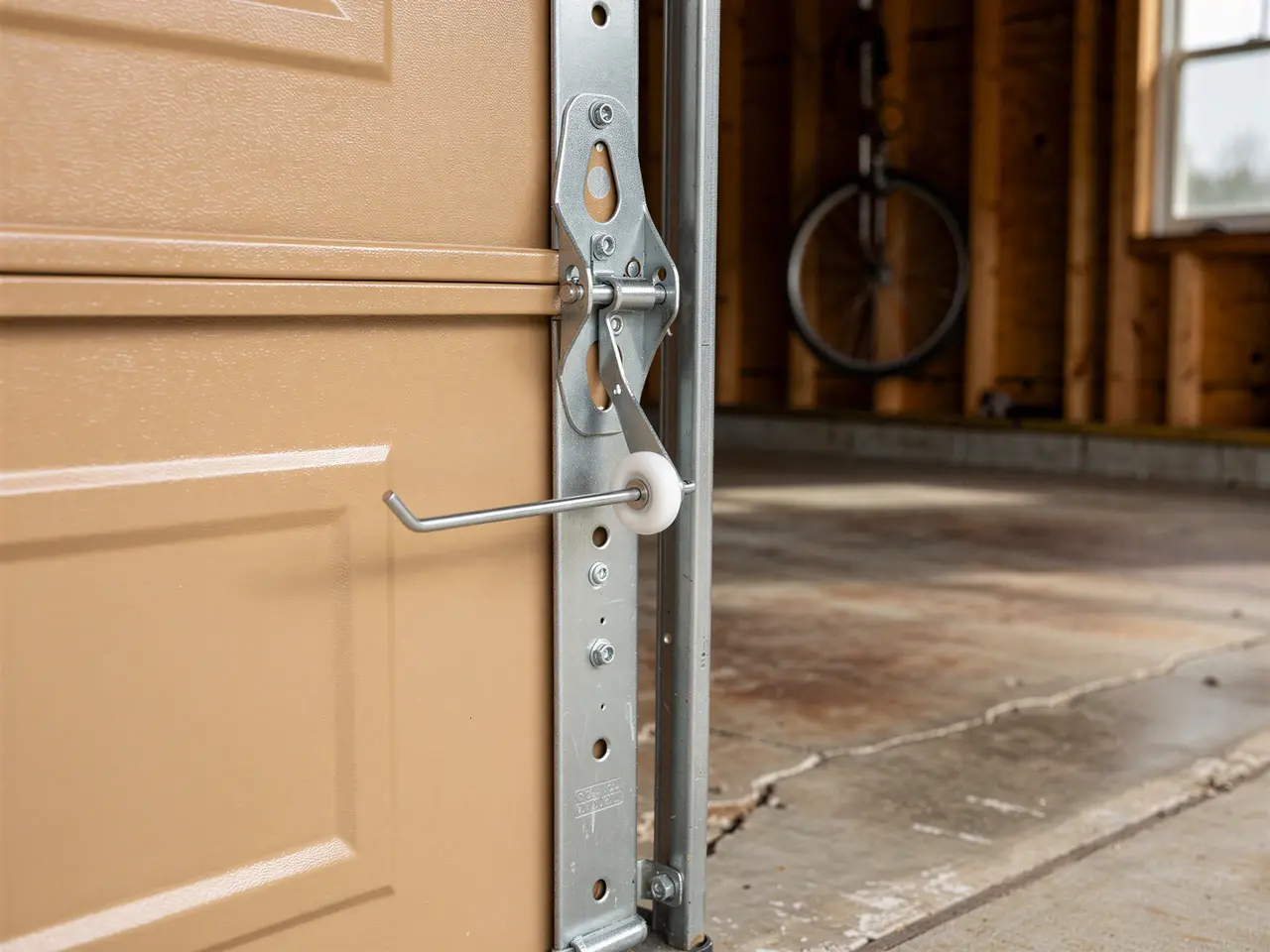
Roller Replacement
Worn nylon or steel rollers replaced to kill the grinding and shaking.
Learn more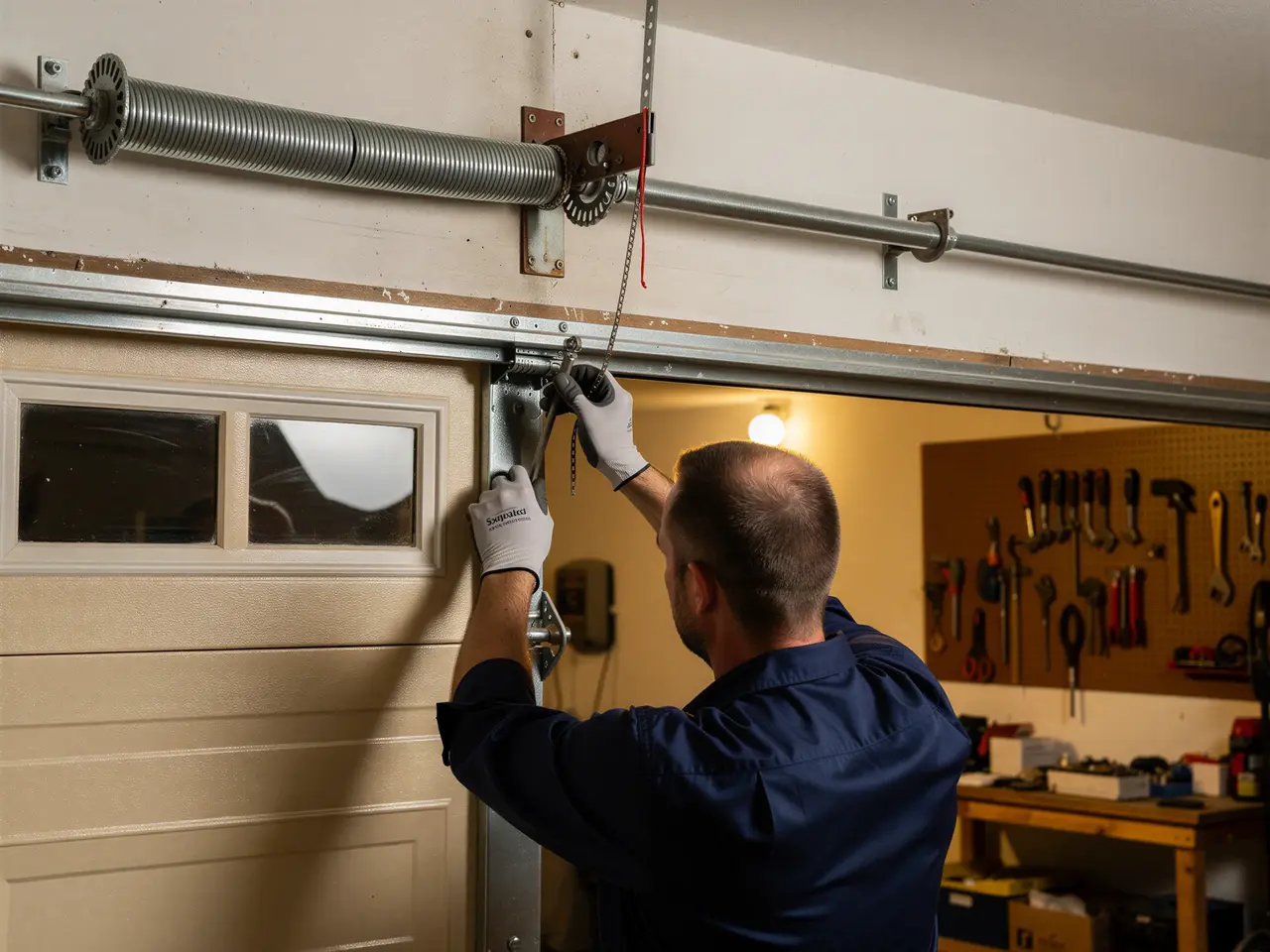
Maintenance & Tune-Ups
Spring tension, roller and track service that keeps an older door running quiet.
Learn moreCommon Problems
Garage door problems we fix in Farmington Hills
A stuck or broken garage door can't wait. Call and tell us what the door is doing - a snapped spring, a frayed cable, a door off its track or an opener that won't respond - and leave a spring-loaded door closed until a tech has looked at it.
- Broken springs and snapped cables
- Doors off the track or stuck shut
- Opener, remote and sensor failures
- Noisy, slow or unsafe doors

Why Farmington Hills Calls Us
How we work on Farmington Hills garage doors
Safe spring work
Torsion springs are wound with proper winding bars - never a do-it-yourself job.
Cause first, then the fix
The tech finds what failed - spring, cable, roller or opener - before recommending a repair.
We come to you
Service visits across Farmington Hills and nearby communities.
Repair or replace
For an older door you get a clear comparison of repairing it versus a new door.
Based in Farmington Hills
A Farmington Hills-based business you can reach directly by phone.
Call or book online
Call (248) 838-3739 or request a quote online.
How It Works
Getting your door fixed is simple
Tell us the symptom
Call or request a quote and describe what the door is doing - noise, off-track, won't open.
On-site diagnosis
A tech inspects the springs, tracks, opener and panels and gives you a written price first.
Repaired or installed
Most repairs are done on the same visit; installs are scheduled around you.
Our Work
Recent garage door projects in Farmington Hills
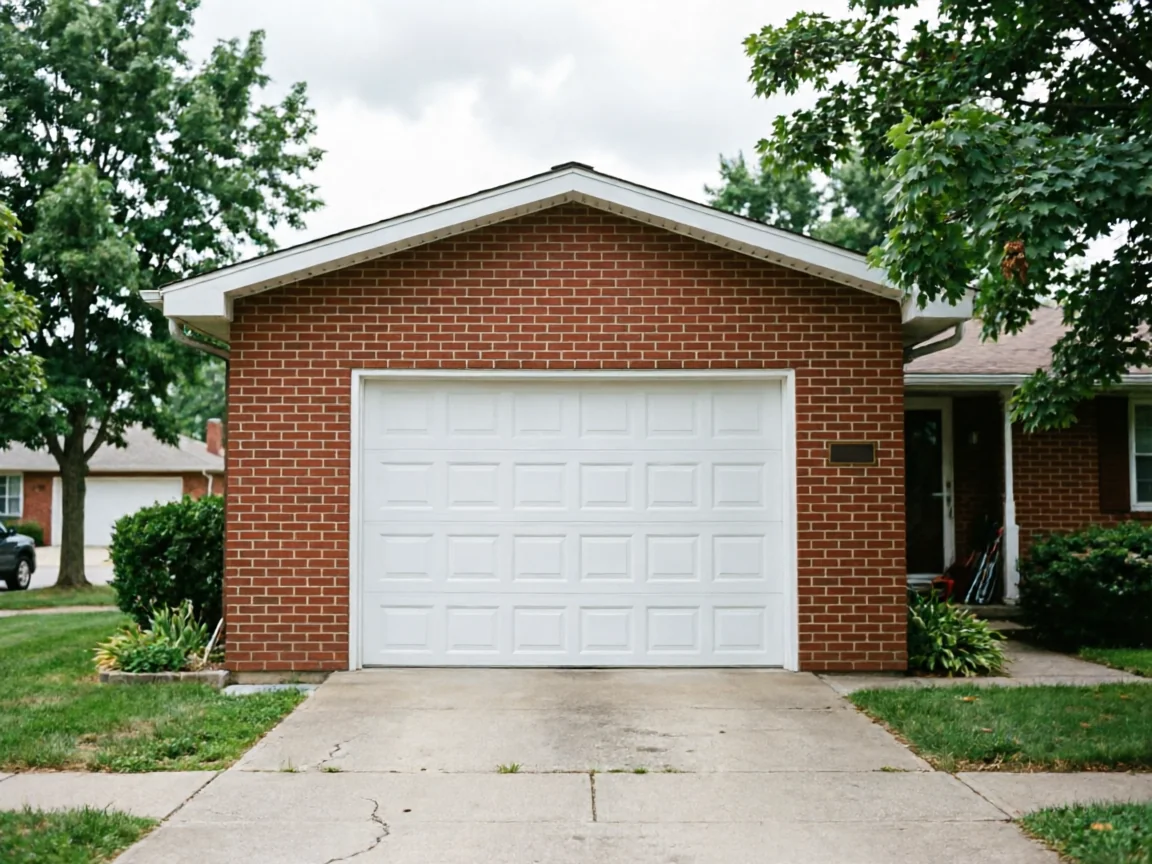
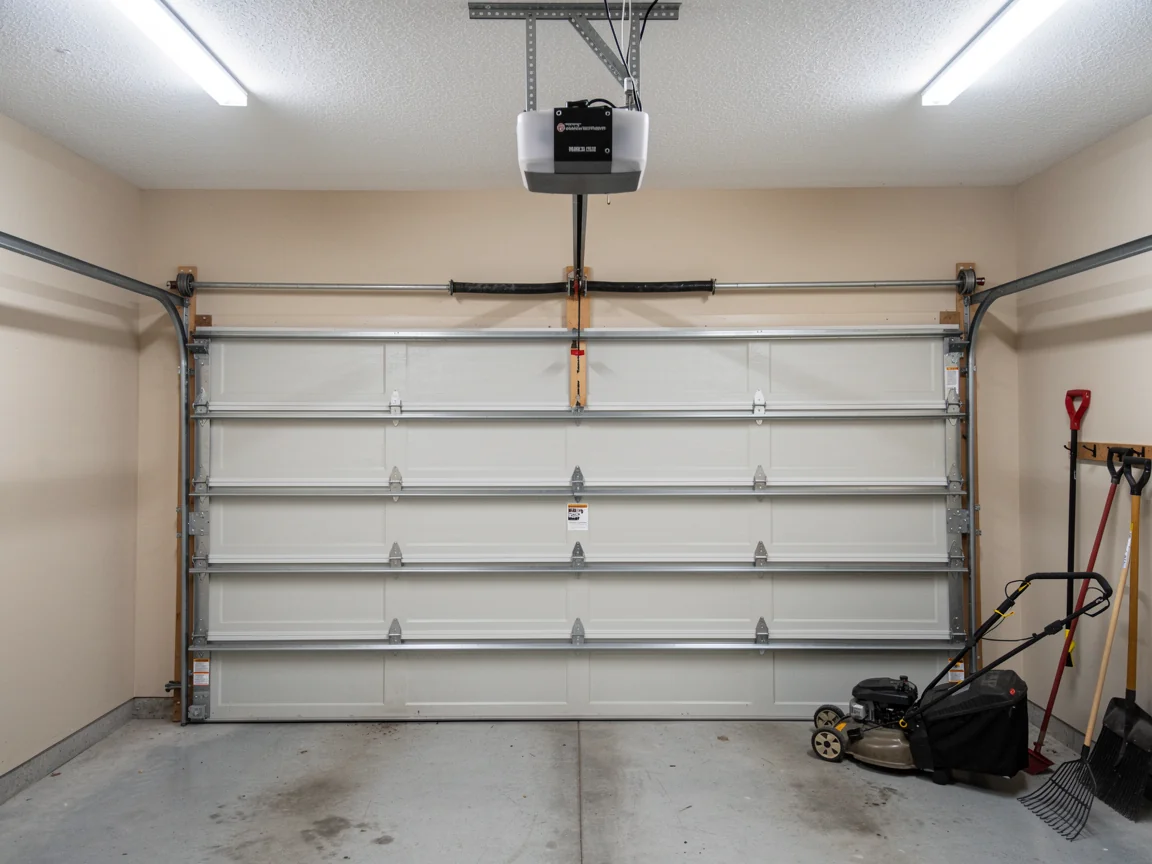
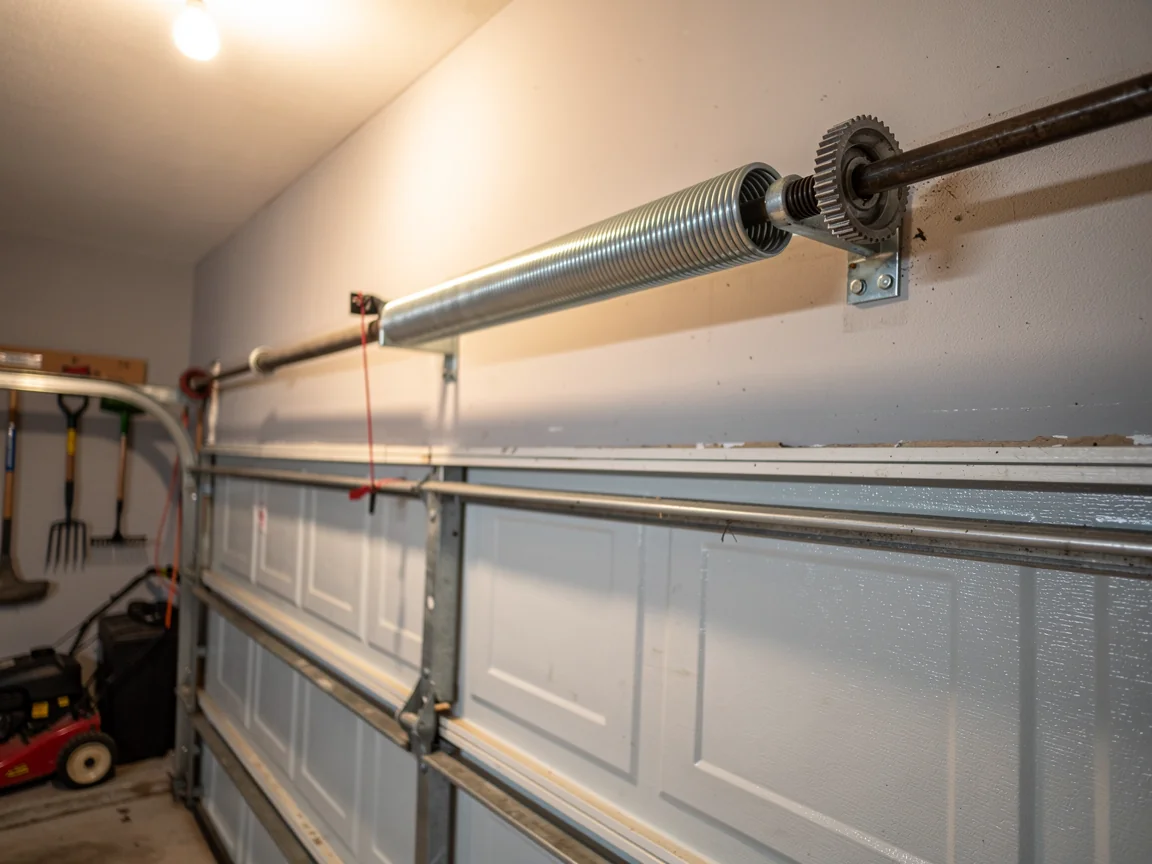
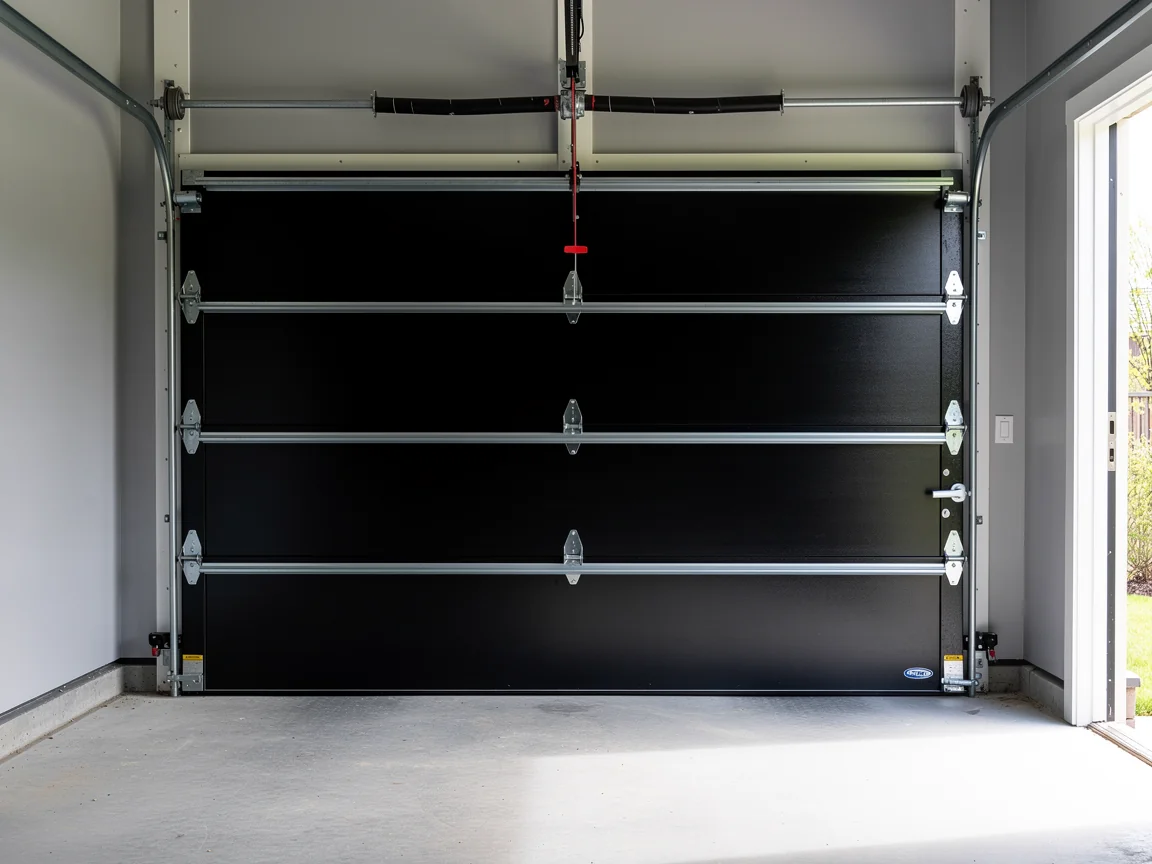
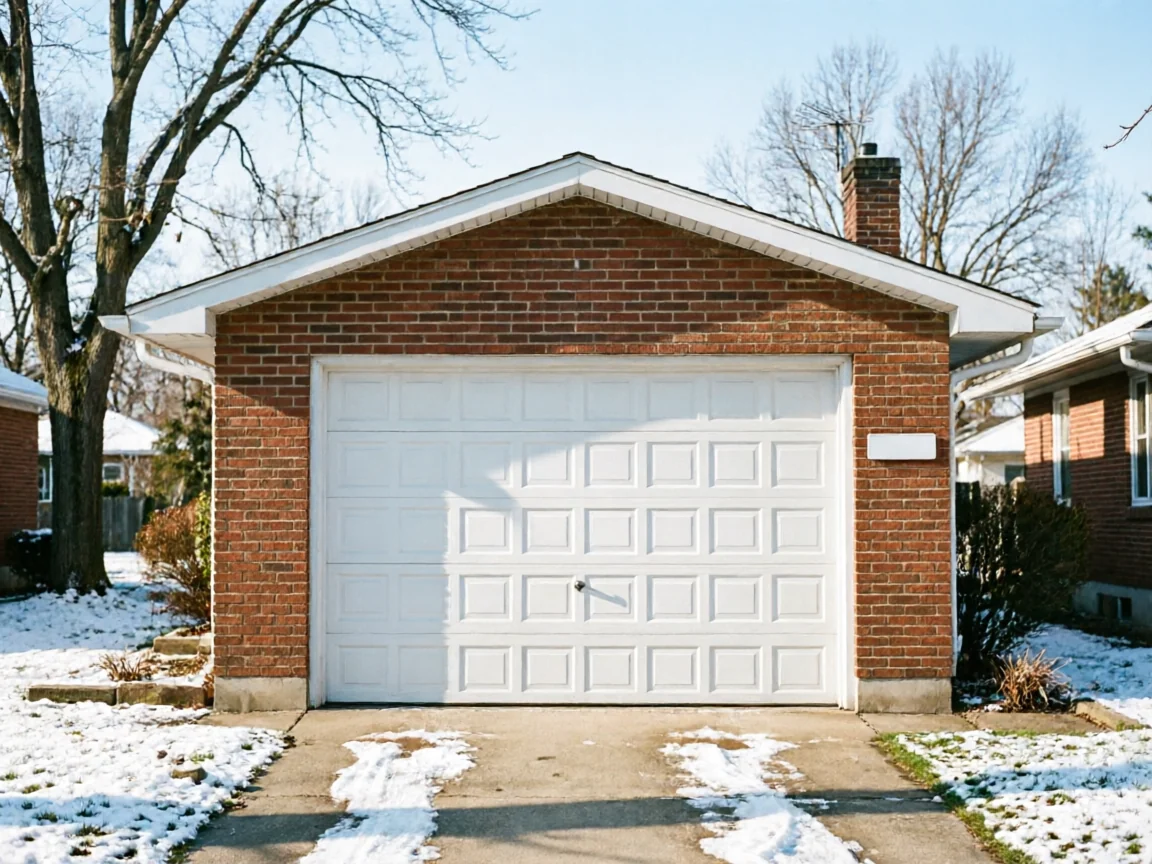
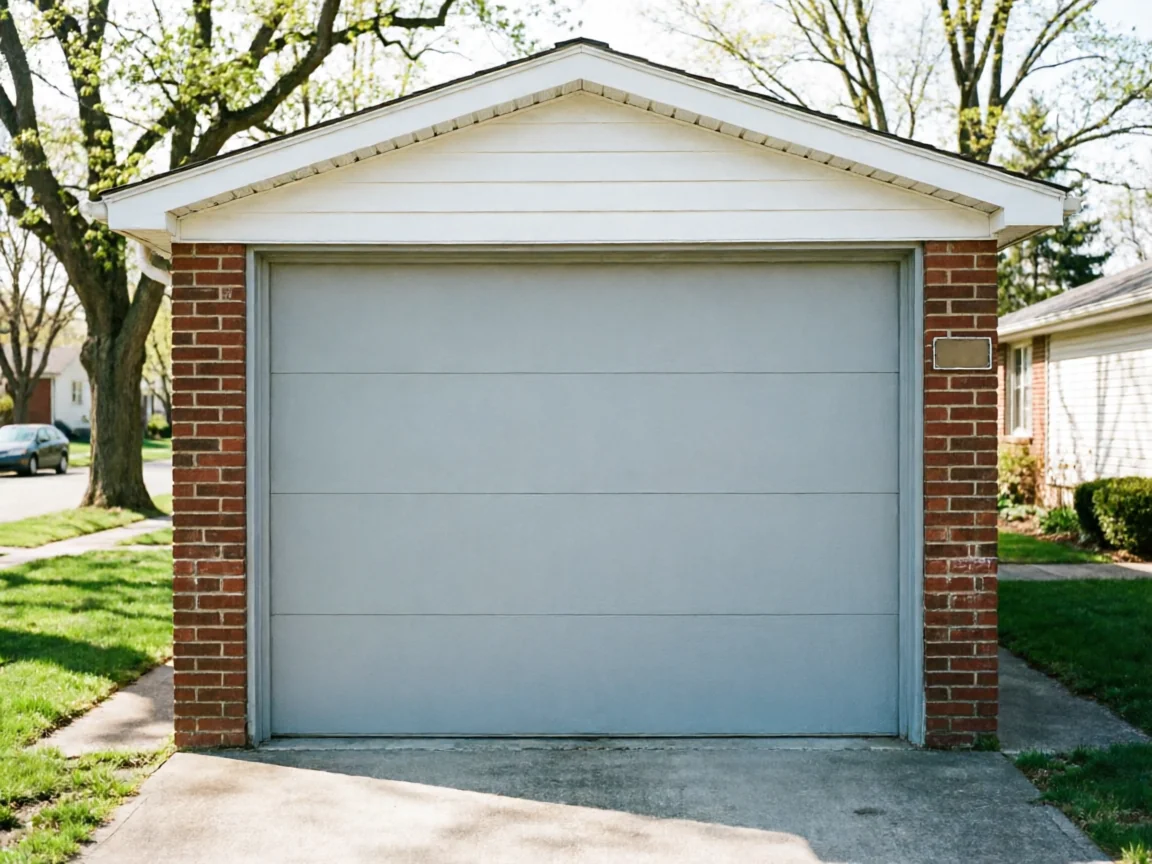
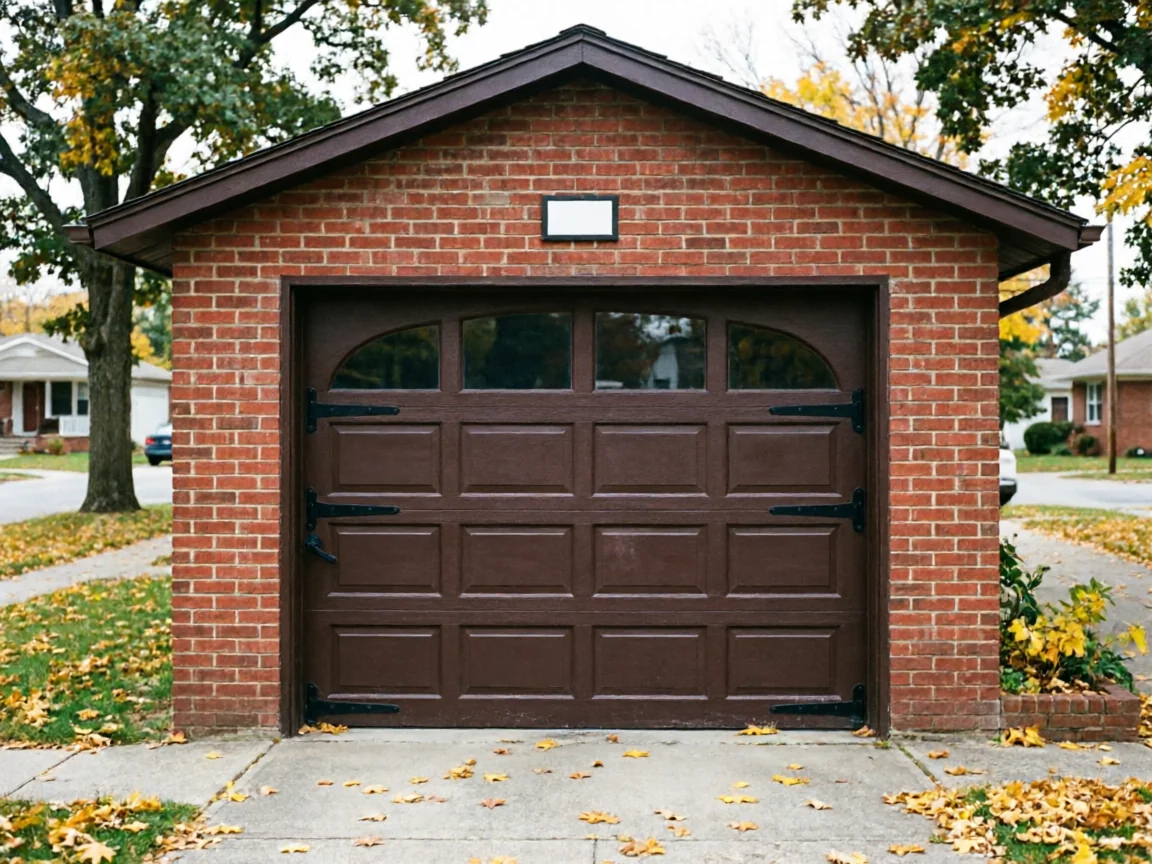
A look at doors, openers and springs we've installed and serviced across the Farmington Hills metro.
Where We Work
Serving Farmington Hills & nearby communities
Neighborhoods across the city and suburbs around the metro. Not sure if we reach you? Just ask.
Nearby suburbs
Local Expertise
What to know about garage doors in Farmington Hills
What You Pay For
You're not paying for a truck to show up. You're paying for someone who knows what's behind the panel before it's off. A lot of the doors we open here are original or near-original to houses built between 1938 and 1991, median year 1960, which means side-mounted torsion springs, hardware gauges that don't match what's on the shelf at the big box store, and tracks that were never meant to carry a modern insulated panel. Pricing on a job depends on what's actually wrong: a snapped torsion spring on a single door is a different job than a bent track on a double door that's been dragging for a year.
We don't quote a number over the phone before we've seen the door, and we won't pretend that's a weakness - a wrong guess costs you more than a short wait for an accurate one. What you're paying for is the diagnosis being right the first time, parts that match the door you have instead of the door we wish you had, and a tech who tells you when a repair isn't worth it. Sometimes it isn't. A 1960s door with a rusted-through bottom panel and a dead opener is often cheaper to replace outright than to patch twice.
How the Visit Works
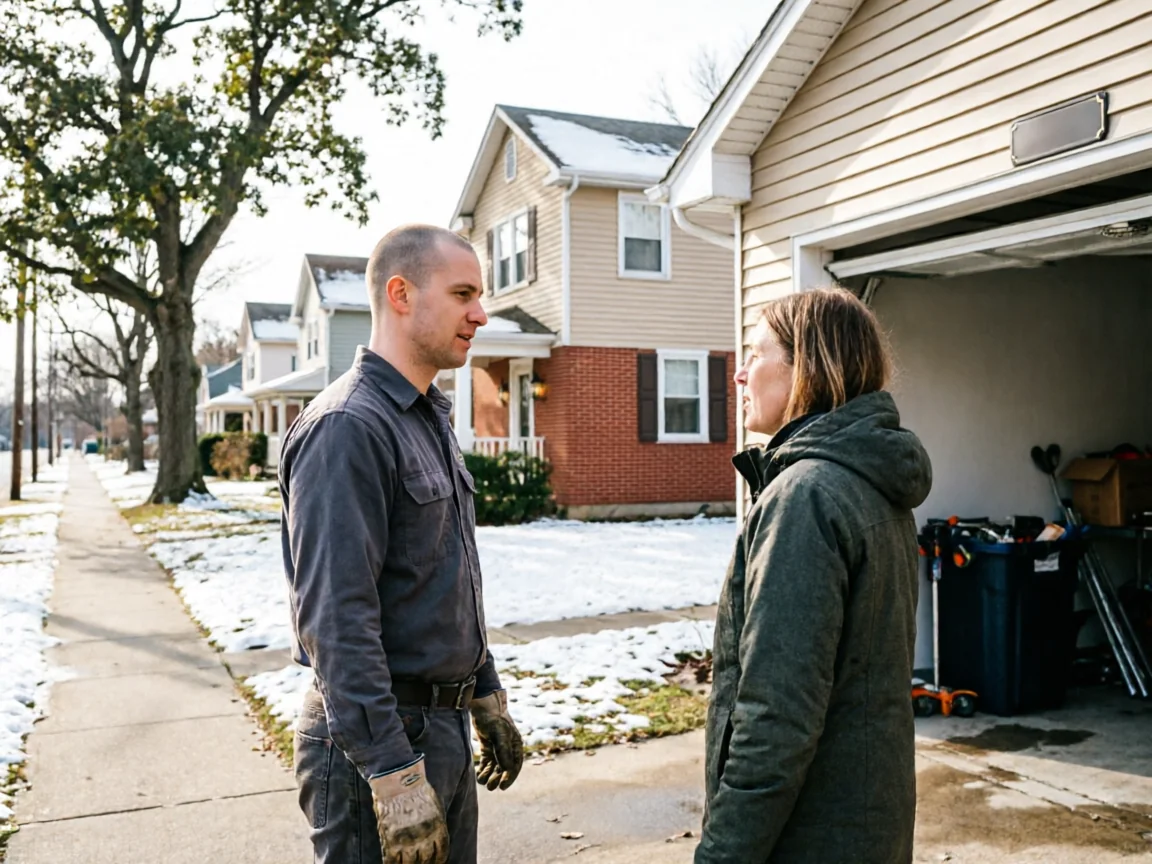
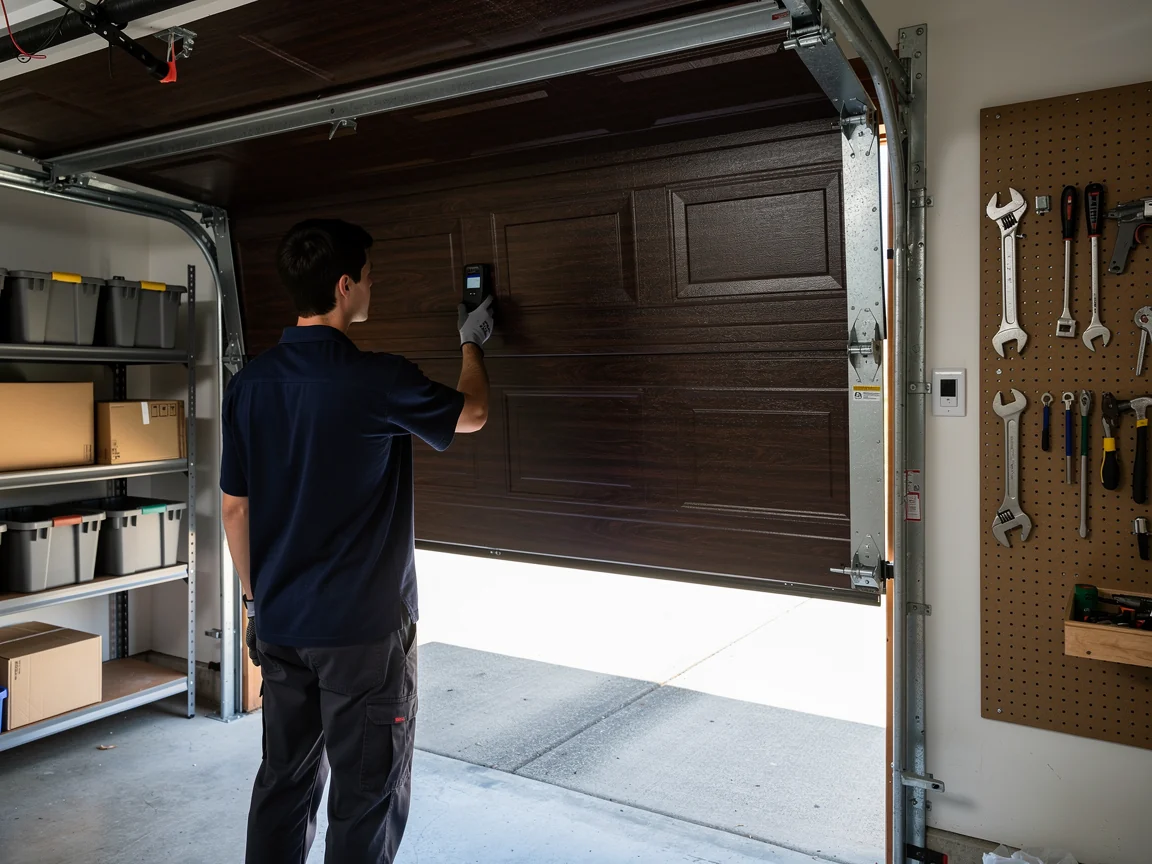
A call gets you a window, not a guess. When the truck gets there, the first ten minutes are spent looking at the whole system - spring, cables, rollers, track alignment, opener - because a door that won't open is rarely one single part failing in isolation. On a house from the 1960s-70s stock that makes up most of this area, that often means checking whether the track was ever upgraded when the opener was replaced, since those two jobs don't always happen together.
Once we know what's wrong, we tell you the options before touching anything else: repair, partial replacement, or full door. If parts aren't on the truck - which happens more with older, non-standard hardware than with anything built in the last fifteen years - we'll say so up front rather than stretch out the visit pretending otherwise. That's the one limitation worth naming plainly: some older spring sizes and track widths aren't stock items, and a second trip or a short order wait is sometimes the honest answer instead of a same-day fix that doesn't actually fit.
The Housing Stock Here
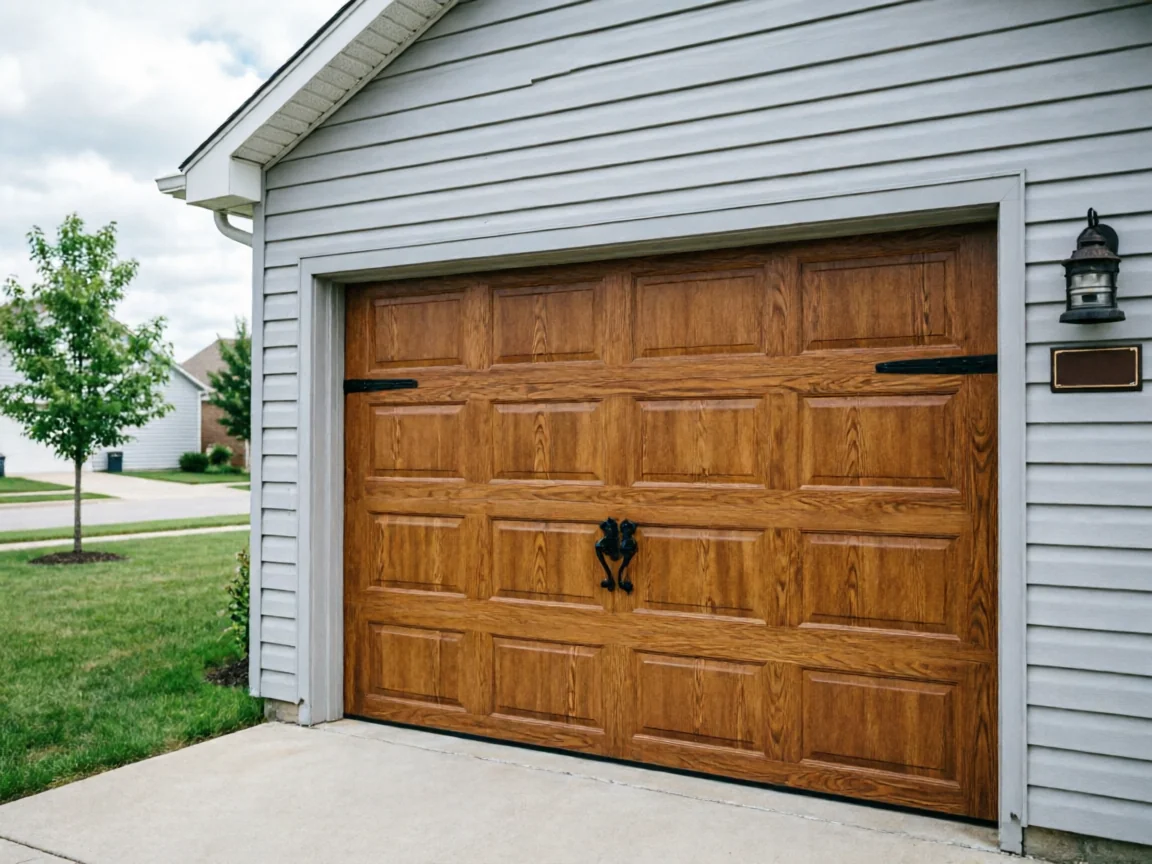
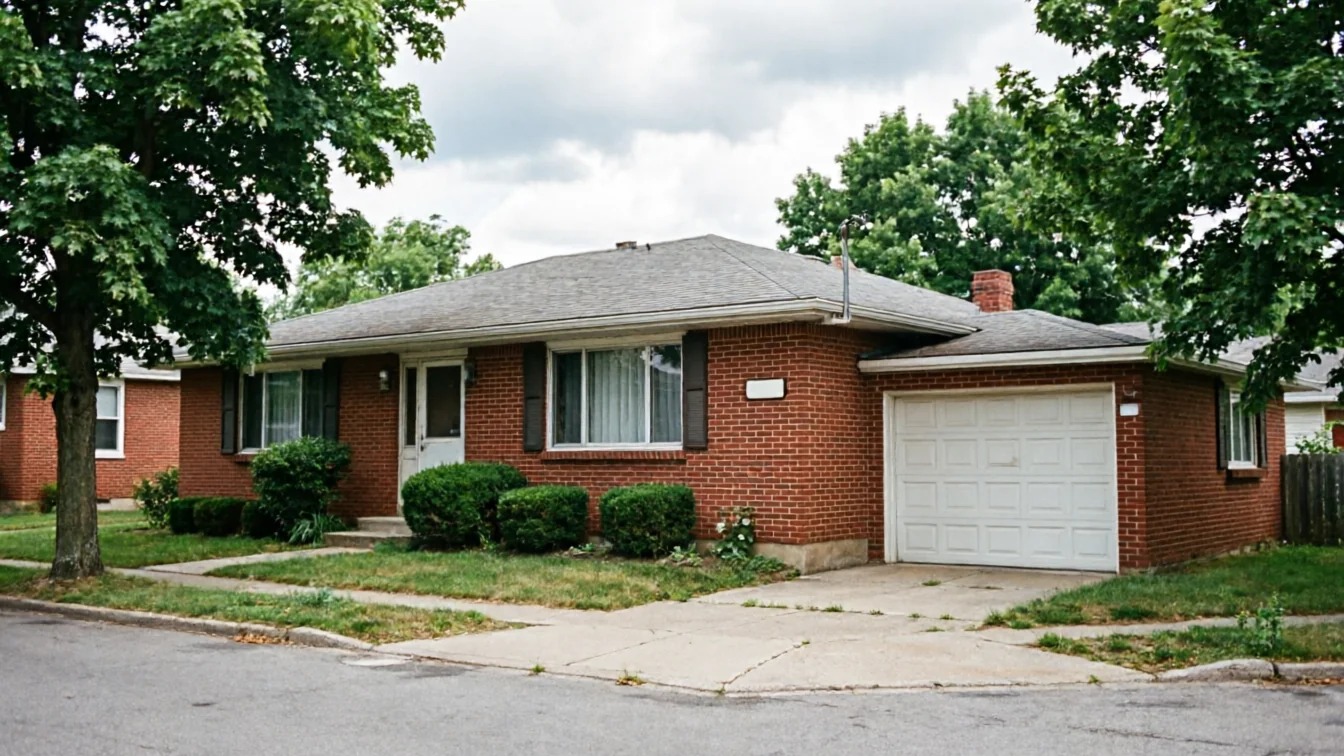
Farmington Hills housing runs from 1938 through 1991, with the median sitting right at 1960, and most of what's on the ground falls into that 1960s-70s band spread across the township's 41 named subdivisions. That matters for garage doors more than people expect. A house built in 1960 was almost always built with a one-piece or early sectional door on side-mounted torsion hardware, hinges and rollers sized differently than anything sold today, and an opening that may have been resized once already when a sectional replaced the original.
Newer pockets built closer to 1991 are more likely to have standard extension or torsion setups that take off-the-shelf parts without modification. The practical effect is that two doors three streets apart can need completely different repairs, and a tech who assumes every door is the same age gets it wrong half the time here. We work on both eras, but we size parts to the door in front of us, not to whatever's fastest to grab off the truck.
Areas We Cover
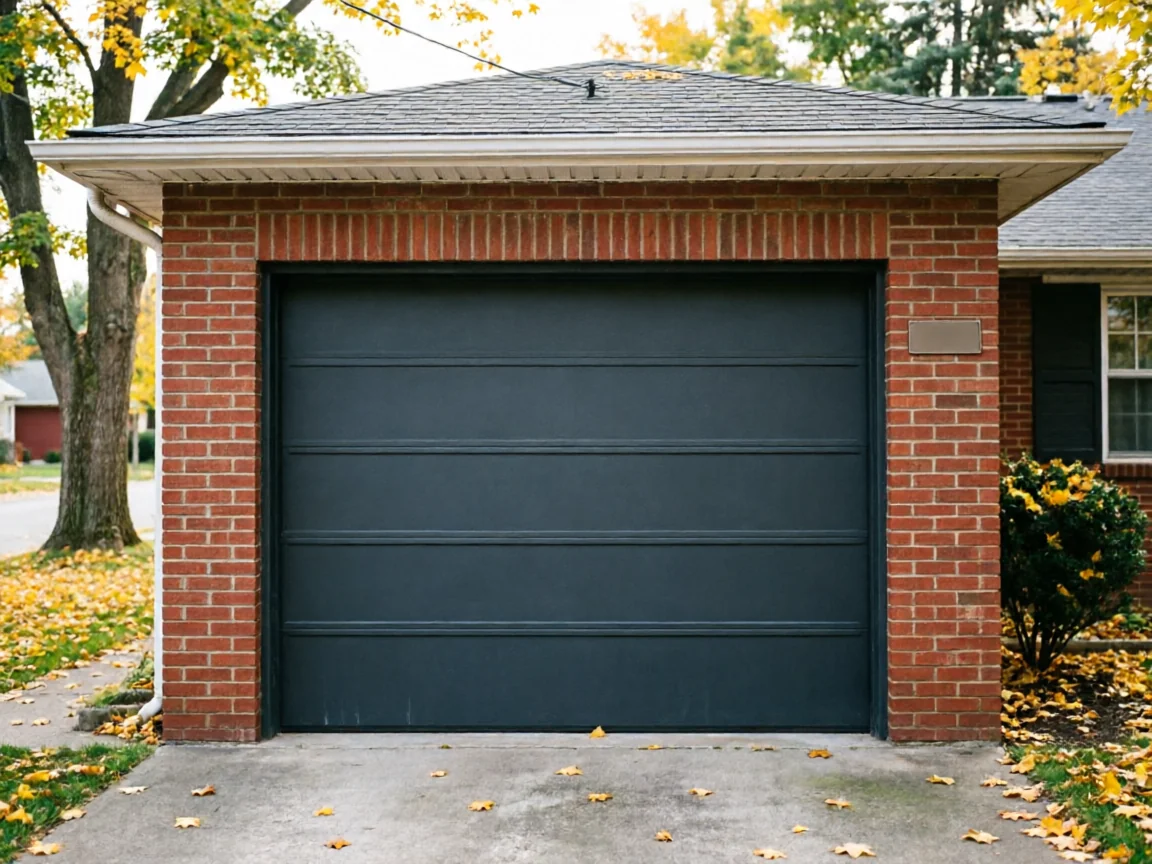
We work out from Farmington Hills through the surrounding communities: Franklin at four miles, Bingham Farms and Walled Lake at six, Northville, Orchard Lake Village, and Wolverine Lake at seven, Beverly Hills also at seven, Lathrup Village and Wixom at eight, Keego Harbor, Birmingham, Plymouth, and Bloomfield Hills around nine, Berkley and Oak Park at ten, Huntington Woods, Dearborn Heights, and Garden City around eleven, Pleasant Ridge and Pontiac near twelve, Ferndale at thirteen, Milford, Inkster, Madison Heights, South Lyon, Hazel Park, and Wayne around fourteen, Auburn Hills and Highland Park near fifteen, and out to the Village of Clarkston at seventeen miles.
That's a wide spread, and it covers a real mix of housing ages and climate exposure, not just distance on a map. A door call in a town four miles out and one seventeen miles out can be dealing with very different hardware eras, which is part of why we don't treat every service call as interchangeable.
What Breaks Around Here
This is a severe cold-climate area, and cold is hard on garage doors in a specific way: steel springs lose temper faster in sustained low temperatures, and nylon rollers that are fine in July go brittle and crack in January. On houses from the 1960s-70s stock that dominates this area, that cold stress lands on hardware that's already decades into its service life, which is why winter is when we see the most torsion spring snaps and the most opener gear-failures on units that were already straining.
Panels take damage differently. Steel sectional doors from the older stock dent and rust at the bottom panel first, especially where snow and road salt sit against the door for months at a stretch. Openers themselves tend to fail less from cold and more from age - a drive gear or capacitor that's been working for fifteen-plus winters finally gives out on the coldest morning of the year, which feels sudden but usually isn't. None of this is exotic. It's what you'd expect from older doors doing their job through a hard winter.
Good to Know
Frequently asked questions
Do you work on original 1960s garage doors or just newer ones?
Both, but the older ones take more care. A lot of houses in this area still have doors and torsion hardware close to original from the 1960s-70s build era, and that hardware doesn't always match current stock sizes. We check before quoting a fix rather than assuming it's a standard part.
Why does my spring keep breaking every winter?
This area sits in a severe cold climate band, and steel springs lose tension and strength faster in sustained cold. If a spring is already near the end of its rated cycle count, winter is usually when it finally lets go rather than during a mild month.
Do you serve towns outside Farmington Hills?
Yes, out to roughly seventeen miles, covering communities like Franklin, Walled Lake, Northville, Birmingham, Plymouth, Pontiac, and the Village of Clarkston, among others nearby. Distance from Farmington Hills affects scheduling more than it affects the kind of work we do.
Is it ever better to replace than repair?
Sometimes, yes. A door from the older end of the local housing stock with a rusted bottom panel, a dead opener, and mismatched hardware often costs more to patch piecemeal than to replace outright. We'll tell you when that's the case instead of running up a repair bill first.
Need a garage door fixed in Farmington Hills?
Call now or request a quote - tell us what the door is doing and where you are.